August 2026
Thursday
The military will not arrive with a ready-made plan. It will move in where the municipality is prepared
On 27 August 2026 ICCSS held the fourth and final webinar of the series “Building Societal Resilience Together” ahead of the Forum in Kielce. The subject was civil-military cooperation (CIMIC) — what local government can obtain from the armed forces, and what the armed forces expect in return.
27 August 2026 · Webinar 4 of the series “Building Societal Resilience Together” · “Civil-military cooperation (CIMIC) in civil protection, civil defence and societal resilience”
On 27 August 2026 the International Centre for Civil and Societal Security (ICCSS) held the fourth and final webinar of the series “Building Societal Resilience Together” ahead of the International Resilience Leaders Forum in Kielce. The subject was civil-military cooperation (CIMIC) — what local government can obtain from the armed forces, and what the armed forces expect in return. The meeting brought together representatives of central government, local authorities, the armed forces and humanitarian organisations.
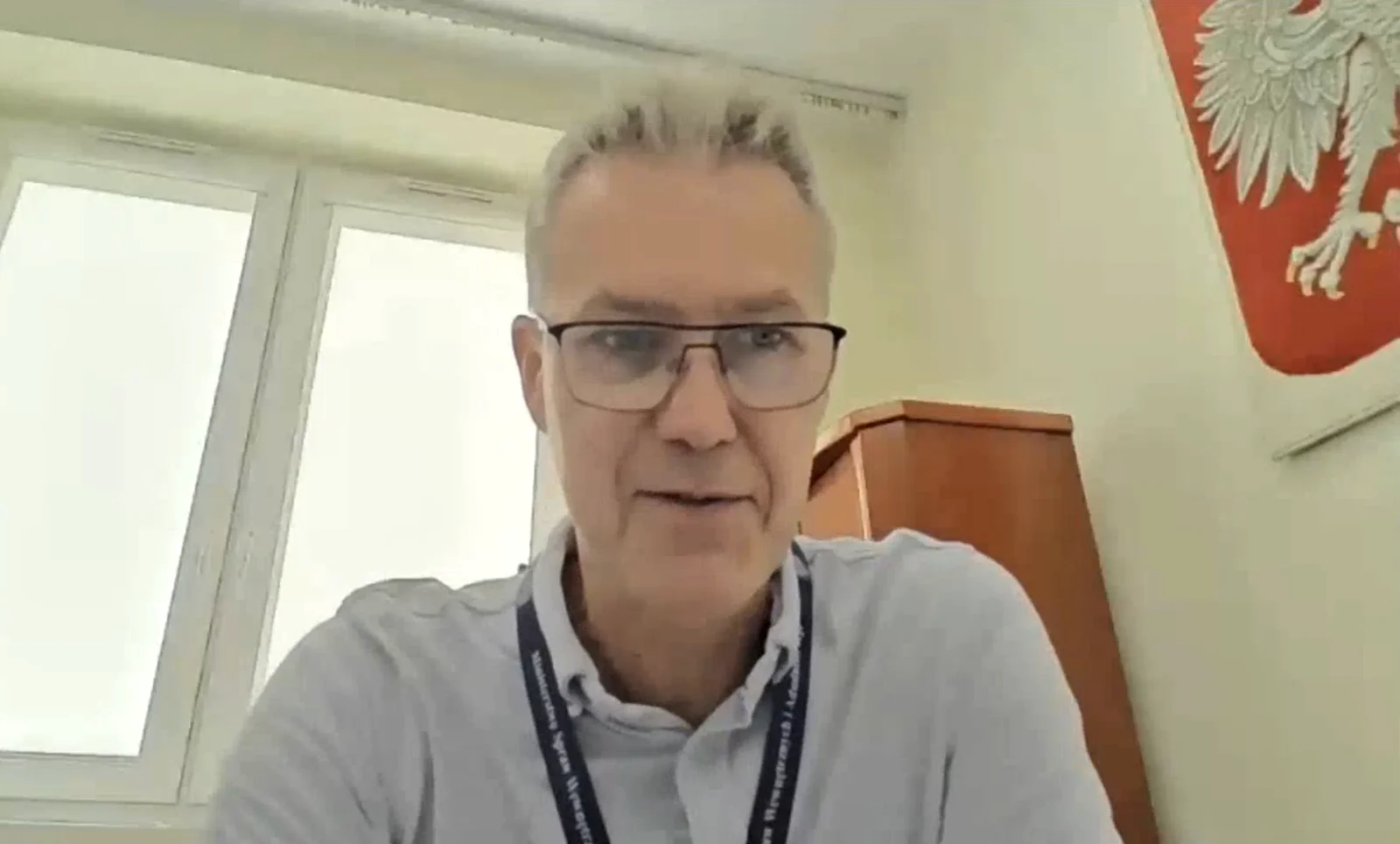
Robert Klonowski
Robert Klonowski (Deputy Director of the Department of Civil Protection and Crisis Management, Ministry of the Interior and Administration) presented CIMIC from the civilian side — from NATO’s seven baseline requirements (7BR) and the work of the Civil Protection Group, which also includes Ministry of Defence representatives, to the air-attack warning procedure (SPO-13) linking the military component, the Government Centre for Security (RCB) and territorial administration. He recalled the statutory guarantee — at least 0.3% of GDP annually for civil protection and civil defence, including 0.15% of GDP within the defence spending limit — and the results of the “Security Handbook”: 16.8 million copies delivered to more than 16.3 million households, now followed by the Universal Civil Protection Workshops as the Handbook put into practice.
Col. Andrzej Soboń
Col. Andrzej Soboń (Dean of the Faculty of National Security, War Studies University) discussed Poland’s reformed civil defence from the military perspective and the expectations towards civilian administration. He also explained the moment at which civil protection becomes civil defence (Article 2(2) and 2(3) of the Act on Civil Protection and Civil Defence): who commands, who executes, and what happens to local government personnel.
Magdalena Stefańska
Magdalena Stefańska (Polish Red Cross, Chair of the Commission for the Protection of the Red Cross Emblem) presented the third side of CIMIC — humanitarian organisations between the armed forces and local government. She pointed to resources that neither the municipality nor the military possesses: blood and blood products, humanitarian assistance for evacuees, and the Information and Tracing Bureau, run by the Polish Red Cross under an exclusive mandate in time of armed conflict. She recalled the status of auxiliary personnel, the protection of the distinctive emblem and the obligations towards the civilian population arising from international humanitarian law.
Col. Krzysztof Orzech
Col. Krzysztof Orzech (Commandant of the Centre for Preparation for Foreign Missions) presented CIMIC as a pillar of societal resilience. He pointed out that the boundary between the civilian and military spheres is blurring, and that security today depends on the cooperation of the state as a whole. The conclusion: civil-military cooperation is a strategic investment, and society must be a partner in security, not its recipient.
Conclusion from the discussion
One conclusion emerged from the discussion, moderated by Amb. Krzysztof Paturej (Chairman of ICCSS): CIMIC does not begin on the day of the crisis. It begins earlier — with prepared procedures, known contacts and rehearsed roles. The military will not bring a municipality a ready-made plan; it will move in where it finds roads, accommodation, communications, supplies and data already prepared. That is work to be done now, not once the alarm has sounded.
The series of four webinars is complete. We meet in Kielce.
International Resilience Leaders Forum @ MSPO 2026
- Date: 10 September 2026, 14:00–17:30, DELTA Hall, Targi Kielce
- Programme: a keynote session with ministers and international partners, a high-level panel “From whole-of-government responsibility to whole-of-society engagement”, an international panel on the Democratic Resilience Supply Chain, a societal panel of civil society organisations, and the launch of preparations for KIELCE IFRE-EXPO 2027
- Registration: www.irlf.eu — participation free of charge, places limited, subject to confirmation by the organisers